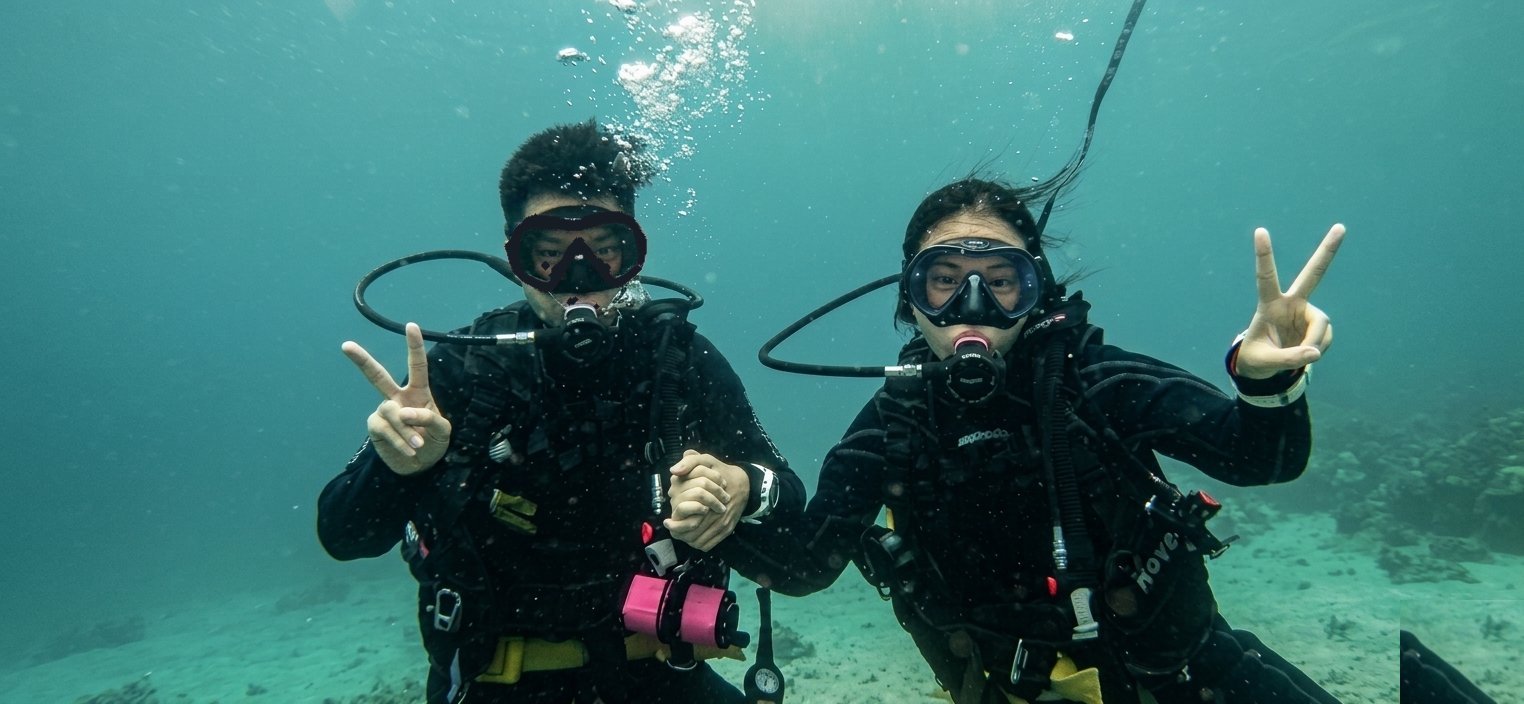
PADI Course
Open Water Diver
Internationally recognized PADI certification. About 4 days from zero to certified diver.
💡🏥 Healthcare · 🎓 Students · 🤿 Returning students HK$100 off with valid ID
Duration
About 4 days (can split across weekends)
Max Depth
Max 18 metres
Prerequisite
Age 10+, swim 200m or float 10 min
Certification
PADI Open Water Diver (worldwide lifetime cert)
Course Overview
The Open Water Diver (OW) is the entry-level full PADI certification. Once certified, you'll hold a globally recognized diving licence that lets you dive to 18 metres and rent gear, join boats, and take Fun Dives or advanced courses anywhere in the world. The certification is lifetime, with no renewal fees.
The whole course takes about 4 days; the course schedule below walks you through each stage.
Course Schedule
Actual scheduling adapts to weather and your progress.
About 4 days in total, plus 8-10 hours of online self-study.
Phase 1 — Pre-course
PADI eLearning (online theory)
8-10 hoursAfter enrollment, you'll get a PADI eLearning account. Study from home on your phone or laptop at your own pace, covering dive physics, physiology, equipment, planning, and safety. Complete 5 modules and a final exam.
Phase 2 — In-person Theory
Theory Session
3 hoursWe'll go over diving safety rules, underwater hand signals, and how to assemble all your gear step by step. At the end, there's a practical quiz to confirm you've got the key points.
Conducted in Tsim Sha Tsui by default, with weekday evenings available. If you can't attend in person, sessions can be moved to Zoom.
Phase 3 — Confined water
Pool skills training
5-6 hoursIn a pool, master diving skills: regulator use, mask clearing, neutral buoyancy, emergency ascent, buddy procedures. Each skill is practiced until you've got it. Pool training can be done in one full day or split into two half-days.
Phase 4 — Open water
Kiu Tsui, Sai Kung dives (4 dives)
2 days4 real ocean dives at Kiu Tsui, Sai Kung. Apply pool skills to the open water: descents, buoyancy control, navigation, buddy communication, emergency drills.
Phase 5 — Certification
Receive PADI certification
Within 1 weekAfter completing all training, PADI issues the global Open Water Diver certification (the digital certification is issued within a week). You're officially a certified diver — dive anywhere in the world.
What's included?
All costs transparent — no hidden fees.
Included
- PADI eLearning account
- Complete PADI study materials (digital)
- Full PADI-certified instructor guidance
- All equipment rental
- Confined water training venue (pool) fees
- Boat fees (4 open water dives)
- Diving accident insurance
- PADI certification fee (PIC)
Not included
- Lunch on dive days (BYO)
Healthcare workers, full-time students, and returning students get HK$100 off with valid ID. Not stackable — please mention which applies when you message me on WhatsApp.
Who is this course for?
An honest look at who this course is — and isn't — for.
This course is for you if…
- Serious about learning diving, not just trying once
- Plan to dive abroad (Philippines, Indonesia, Maldives etc.)
- Want an internationally recognized certification
- Willing to invest about 4 days of learning
- Curious and patient with underwater environments
Maybe not for you if…
- Just want to try once (consider DSD experience instead)
- No way to set aside about 4 days for the course
- Uncontrolled cardiopulmonary conditions, recent surgery, severe ENT issues
- Can't swim 200m or float 10 min (water skills lessons can come first)
Why all boat dives?
Most Hong Kong dive sites require walking across rocks or stairs to reach the water — carrying a 12 kg BCD and tank means students are exhausted before their first open-water dive.
My approach: After theory and pool training, every open-water training dive (4 for OW) is from a boat.
The advantages of boat diving:
- No gear-hauling (less fatigue, fewer falls)
- Ready to dive when you board — more time enjoying underwater
- Closer to a 'real dive trip' experience, not a training session
Safety is non-negotiable
The Open Water course is the most important foundation of your PADI training, and I follow PADI international standards strictly. After enrollment, you'll complete a full health declaration. If anything is uncertain, I'll ask you to consult a doctor before continuing.
During training, the student-to-instructor ratio never exceeds 1:4. For open-water sessions, I typically run 1:2 or 1:3, so I can see every student simultaneously. Every skill is practiced in confined water until you've truly got it — only then do we take it to the ocean.
If conditions are unsuitable (typhoon signals, heavy rain, very poor visibility), I cancel the day and reschedule. I never push to "stay on schedule" at the expense of safety. If you progress more slowly than expected, I'll schedule additional training sessions. These are charged at actual cost only (boat seat, air tank, equipment, pool rental) — I don't charge for my own instructor time. I believe that if you need extra practice to master a skill, that's an extension of the teaching, not an opportunity to charge twice.
No instructor fee for retraining
Every student learns at their own pace — some skills not clicking on the first open-water training is normal and doesn't mean you can't dive.
If retraining is needed:
- Boat, tank, insurance fees: charged at actual cost
- Instructor fee (my time): not charged
PADI performance requirements are a baseline, not a selling point. Students shouldn't force a pass to avoid extra fees, and I shouldn't delay your pass because of retraining fees.
Frequently Asked Questions
The most common questions students ask about this course.
Want to learn more about Open Water Diver?
Message me on WhatsApp first. I usually reply within 2 hours, 24 hours at the latest.
Ask about the Open Water Diver courseNot sure what to ask? Try:
- ·「Should I learn diving in Hong Kong or overseas?」
- ·「How much does the OW course typically cost?」
- ·「I want to start next month — is it possible to arrange?」
Ask anything on WhatsApp first · No high-pressure sales · Usually reply within 2 hours
Related Courses
What you might want to explore next.
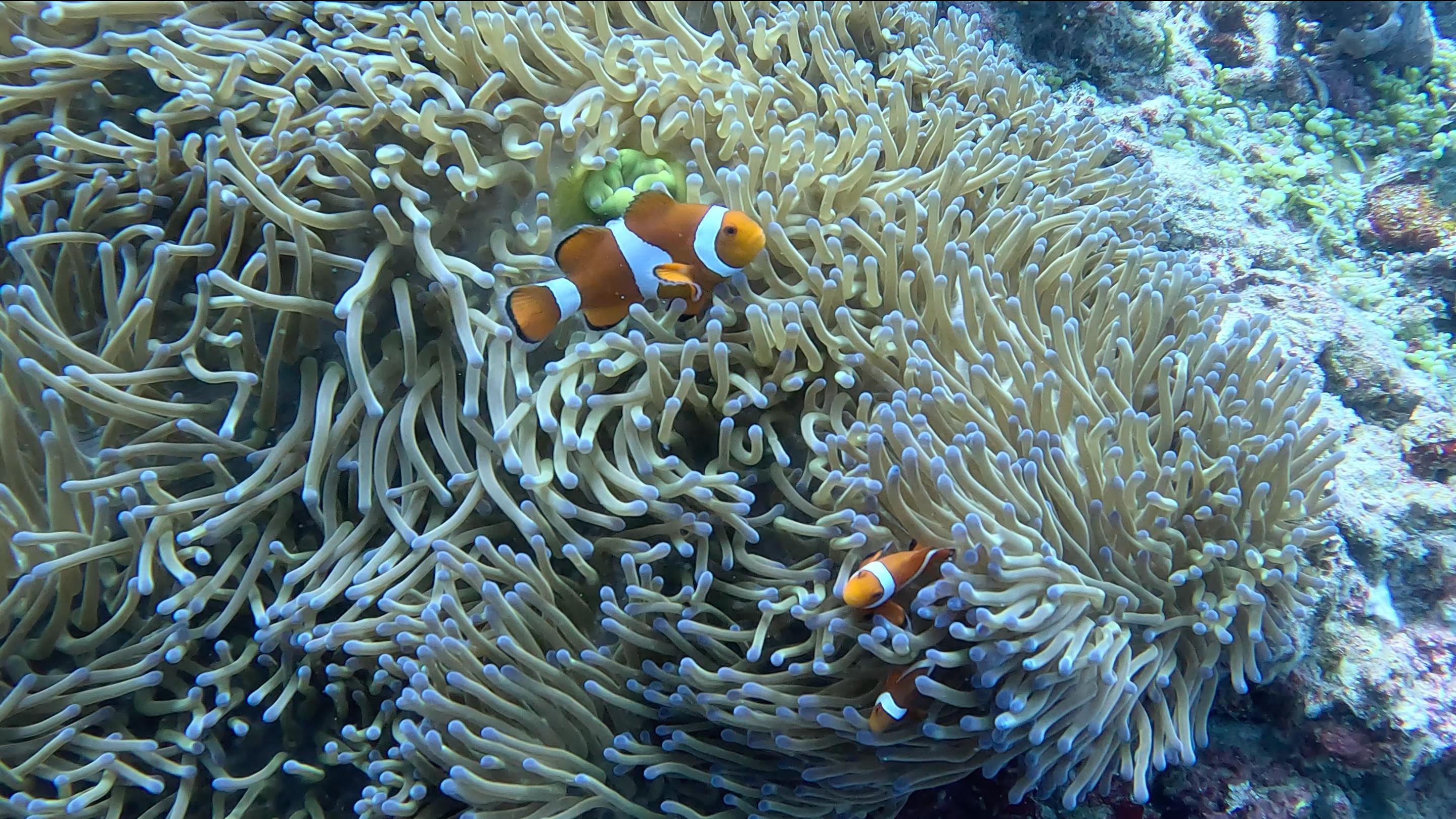
Discover Scuba Diving
Want to try diving but not ready to commit to a full certification course
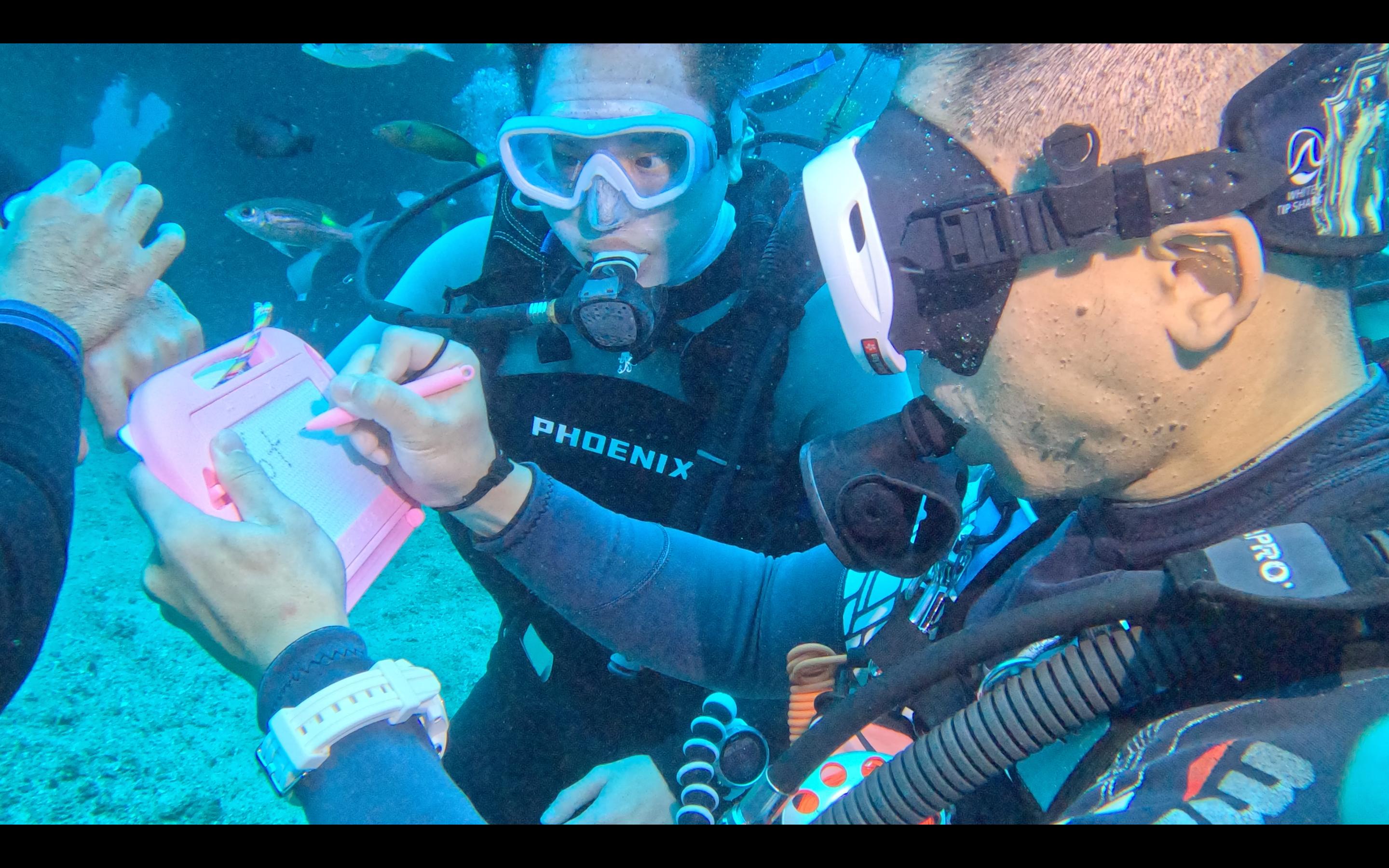
Advanced Open Water Diver
Dive to 30 metres, complete 5 adventure dives, and become a more confident diver.
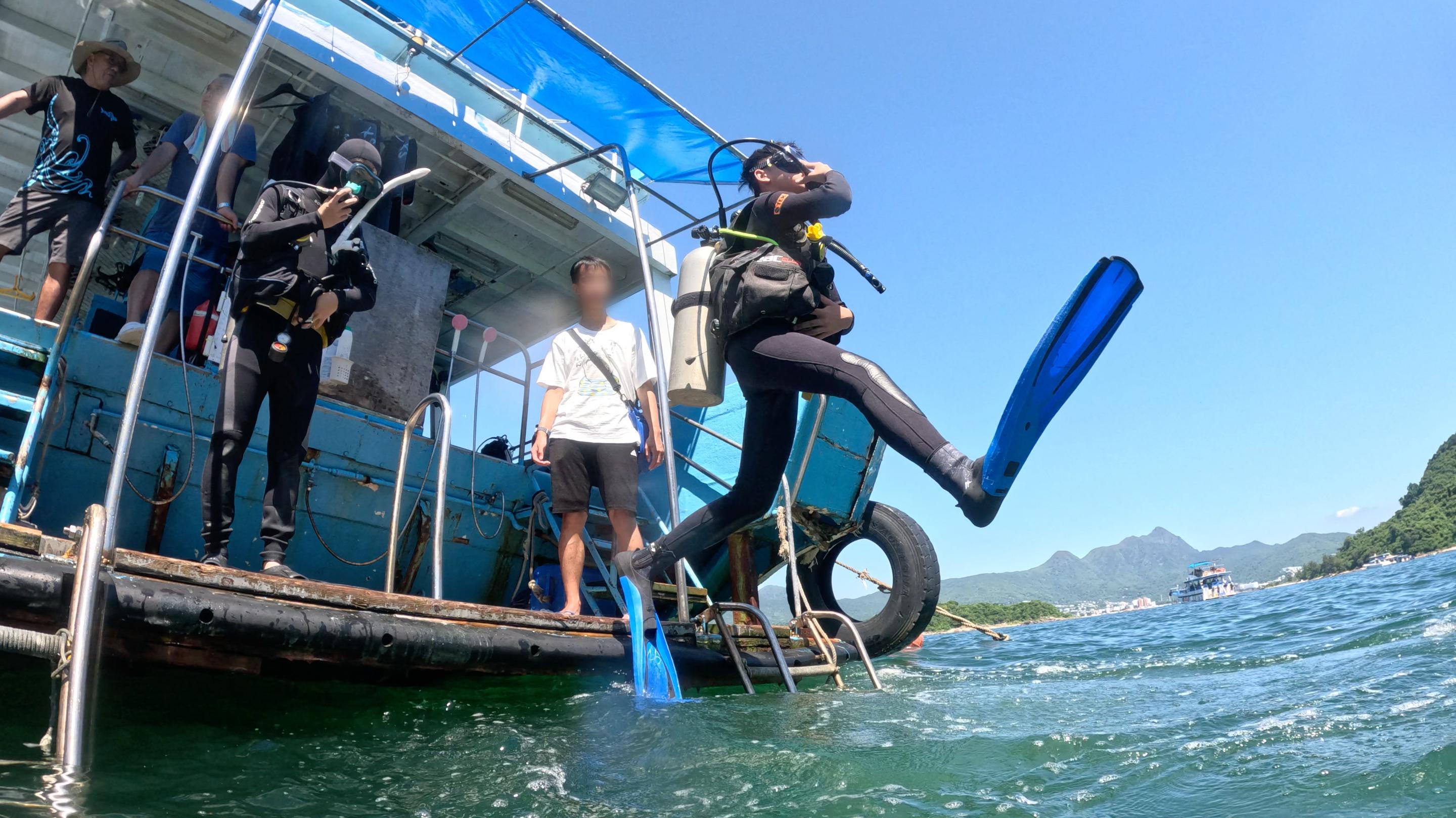
Reactivate
Been out of the water? One day to rebuild your confidence and skills.